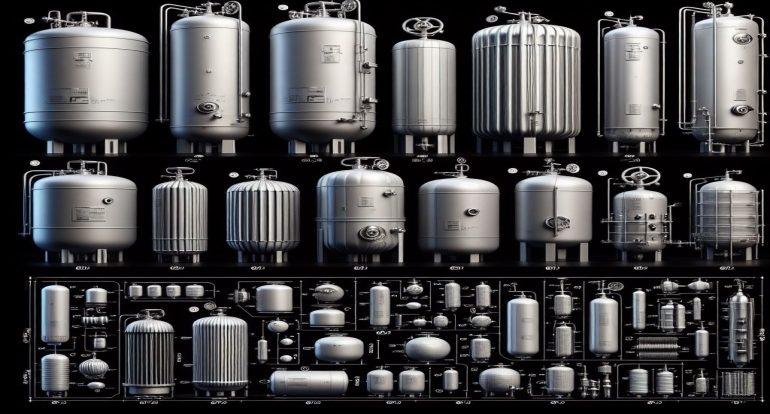
Expansion Vessels
Common Mistakes to Avoid During the Assembly Process
The assembly process is a critical stage in the manufacturing of any product, as it involves putting together the components and parts that make up the final product. The assembly process can be manual, automated, or a combination of both, depending on the complexity, quantity, and quality of the product. However, regardless of the type of assembly process, there are some common mistakes that can occur and affect the outcome of the product. These mistakes can result in defects, rework, waste, delays, or even injuries. Therefore, it is important to identify and avoid these mistakes during the assembly process, by applying proper methods, tools, and techniques.
Some of the common mistakes to avoid during the assembly process are:
- Using the wrong parts or components: This mistake can happen when the parts or components are not clearly labeled, sorted, or stored, or when the assembly instructions are not clear or accurate. Using the wrong parts or components can cause the product to malfunction, fail, or not meet the specifications. To avoid this mistake, it is important to have a system that ensures the identification, traceability, and availability of the parts or components, such as a barcode or RFID system. It is also important to have clear and accurate assembly instructions that specify the type, quantity, and location of the parts or components.
- Assembling the parts or components incorrectly: This mistake can happen when the assembly workers are not trained, skilled, or experienced enough, or when the assembly instructions are not clear or accurate. Assembling the parts or components incorrectly can cause the product to malfunction, fail, or not meet the specifications. To avoid this mistake, it is important to provide adequate training, supervision, and feedback to the assembly workers, and to have clear and accurate assembly instructions that specify the sequence, orientation, and alignment of the parts or components. It is also important to use tools and techniques that facilitate correct assembly, such as visual controls, operator control, or tool interlock.
- Damaging the parts or components during assembly: This mistake can happen when the assembly workers are careless, rough, or inattentive, or when the assembly tools or equipment are not suitable, calibrated, or maintained. Damaging the parts or components during assembly can cause the product to malfunction, fail, or not meet the specifications. To avoid this mistake, it is important to ensure the safety, quality, and efficiency of the assembly workers, tools, and equipment, by providing proper training, supervision, and feedback, and by performing regular inspections, tests, and repairs.
- Not checking or adjusting the product during or after assembly: This mistake can happen when the assembly workers are overconfident, complacent, or in a hurry, or when the assembly standards or procedures are not defined, followed, or enforced. Not checking or adjusting the product during or after assembly can cause the product to malfunction, fail, or not meet the specifications. To avoid this mistake, it is important to have a system that ensures the verification, validation, and correction of the product during or after assembly, such as a quality control, testing, or inspection system. It is also important to have clear and accurate assembly standards or procedures that specify the criteria, methods, and frequency of checking or adjusting the product.